Your appointment.
Practical information for your first appointment, ongoing treatment and communication with your usual eye care team.
Your first visit
What to bring and how to prepare.
↓02After treatment
Recovery, eye drops and follow-up.
↗03Lens options
Understand the choices before cataract surgery.
↗Before your appointment
- Bring your referral, Medicare card and private health insurance details if applicable.
- Bring your current glasses, eye drops and a medication list, including allergies.
- Bring relevant reports or scans if they have not already been forwarded.
- Allow time for assessment and any imaging. Ask the team about the expected duration.
- Drops may be used to dilate (widen) your pupils. This can blur vision and make your eyes light-sensitive. Bring sunglasses and arrange transport rather than driving until your vision is safe.
During your visit
You may first see an optometrist or clinical team member for measurements and imaging, followed by your ophthalmologist as required. We will explain the findings and agree on the next steps with you.
If you need communication assistance or have mobility needs, let the team know when booking so arrangements can be discussed.
Four parts of your care,
made clearer.
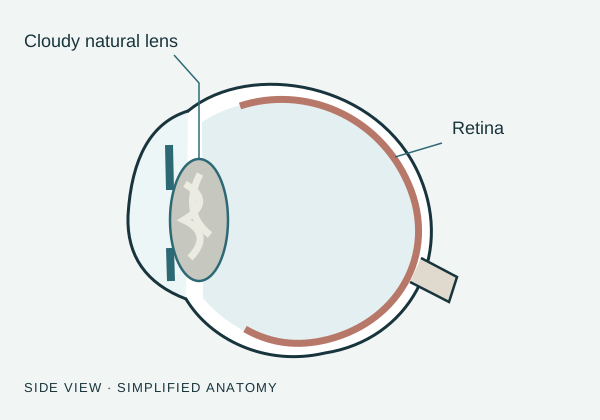
Simple side views of the eye. These illustrations explain the principles; anatomy and instruments are simplified and not to scale.
 Enlarge diagram ↗
Cataract
Clouding of the natural lens can cause blur and glare. Surgery replaces this lens with an artificial implant.
Read about cataract ↗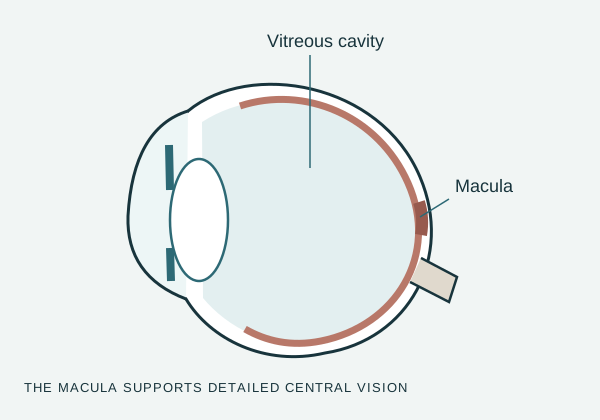 Enlarge diagram ↗
Macula
This small central part of the retina supports reading, recognising faces and other detailed tasks.
Read about macula ↗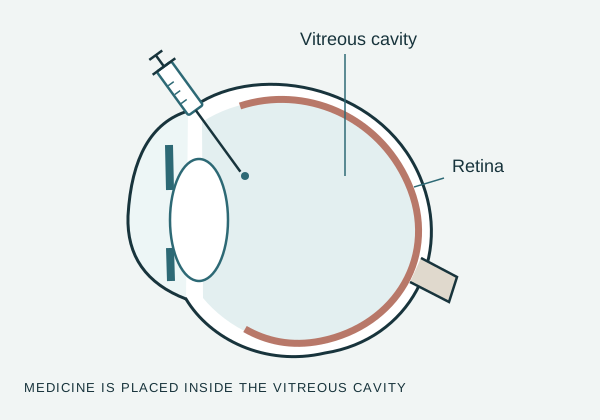 Enlarge diagram ↗
Intravitreal injection
Medicine enters the vitreous cavity inside the eye, where it can act on retinal disease.
Read about intravitreal injection ↗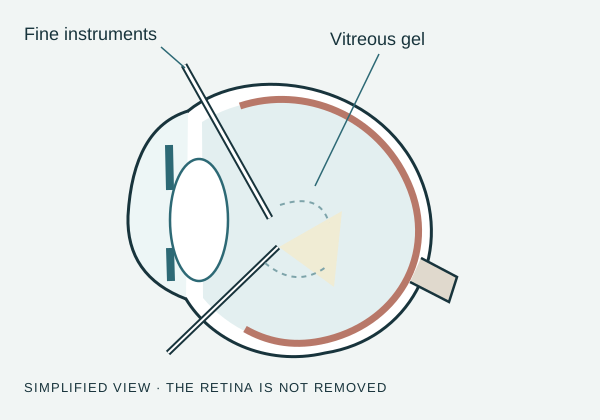 Enlarge diagram ↗
Vitrectomy
Fine instruments remove vitreous gel so the surgeon can treat the underlying problem.
Read about vitrectomy ↗Fees & treatment costs
Fees depend on the consultation, investigations and treatment required. Contact the practice for current fees, expected Medicare rebates and any out-of-pocket costs. Private hospital and surgical costs are discussed separately when applicable.
For planned surgery, ask for an itemised estimate covering the surgeon, anaesthetist, hospital and any lens-related costs.
For referring clinicians
For urgent cases, telephone the clinic directly to discuss assessment. For routine referrals, include the reason for referral, urgency, visual acuity (the measured level of vision), relevant history, medication list and imaging where available.
Phone: 08 7070 2502
Fax: 08 8125 3880
Referral enquiries: [email protected]
Contact the practice to confirm the preferred secure method for transmitting patient information.
Common questions.
Do I need a referral?+
A valid referral is generally needed to access Medicare specialist rebates. Ask the practice what is required for your appointment.
Should I stop my medication?+
Do not stop prescribed medication unless your treating clinician gives you specific instructions. Bring your medication list to the consultation.
What if my symptoms change before review?+
Contact the practice rather than waiting for the planned appointment. Sudden vision loss, new flashes or floaters, a curtain or severe pain needs urgent assessment.